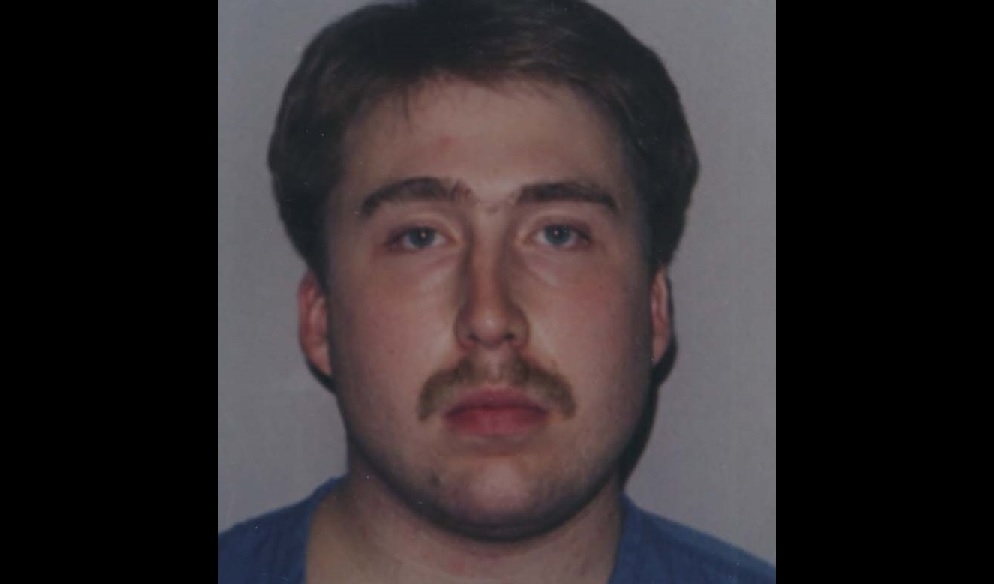
The parole board agrees dangerous offender William Shrubsall is still a danger. So why grant him full parole? Good question. Bad answer.
The column first appeared in the Halifax Examiner November 27, 2018.
“After considering the following information, the Board has decided to take no action on your day parole and to grant full parole for deportation.
The Board explains its reasons below…”
Start with this. When considering 47-year-old Ethan Simon Templar MacLeod’s request for parole earlier this month, the Parole Board of Canada already had plenty of sordid history it could sift through.
In 1988, the night before he was to deliver the valedictory at his high school graduation in Niagara Falls, NY, MacLeod (better known by his birth name, William Chandler Shrubsall, aka Ian Thor Greene, Ian O’Leary, Joe Thunder et al) beat his mother to death with a baseball bat. He was convicted of manslaughter. Eight years later, following closing arguments in another trial involving a sexual assault — one of a number he committed in the US — Shrubsall left behind a suicide note and disappeared.
Two years later, he showed up in Halifax where, in the space of just a few months, he viciously assaulted one young woman with a baseball bat, fracturing her skull, and sexually assaulted at least three other women.
Shrubsall was not only convicted of those specific crimes but, on Dec. 21, 2001, declared a dangerous offender, a designation “reserved for Canada’s most violent criminals and sexual predators.”
To pin that label on Shrubsall, legendary Halifax police detective Tom Martin spent an “all-consuming” three years on the investigation, traveling to “Niagara Falls twice and also to Philadelphia, where Shrubsall went to university, interviewing and re-interviewing neighbours, ex-girlfriends and even the pawn shop owner to whom Shrubsall had sold his valedictory medal. Along the way, Martin filled 25 banker’s boxes worth of notes, statements, videos and other assorted evidence” to buttress the case against him.
After hearing the evidence, the judge who presided at Shrubsall’s dangerous offender proceedings concluded there was no “realistic prospect of controlling [his] threat of dangerousness and managing the risk” in the community. Shrubsall’s behaviour, said the judge, “would likely result in death, severe physical injury or psychological damage to a future victim.” Citing the judge’s decision, the parole board noted, “there was no period of time after which [the judge] felt you would no longer pose a risk and that the court was not willing to ‘gamble on the safety of the public’ given that risk.”
The judge declared him a dangerous offender, which leads to indeterminate incarceration, which “usually equals a life sentence.”
Despite that, Shrubsall was legally entitled to apply for parole after serving seven years.
Since 2012, he applied four times and been turned down every time. Until…
When it convened Nov. 7 to hear Shrubsall’s most recent appeal, the parole board knew all that, and more.
His most recent psychological risk assessment, for example, had been conducted just two months earlier. Addressing its comments directly to Shrubsall, the parole board report stated: “The psychologist concluded that you continue to present as a high risk to re-offend sexually and that there is no institutional programming that would reduce your risk to a point where it would be manageable in the community.”
During the hearing, the board did note, “[you] expressed remorse for your actions and indicated that you review victim impact statements from time to time in order not to forget the impact of your actions. You said that the focus of your time in jail is spent to rehabilitate yourself and you need to remember the harm that you have caused.”
But board members were “skeptical” of his profession of remorse, Instead, they suggested, “you displayed a facet of your narcissistic personality as you showed that you are primarily concerned with yourself.”
In addition to “your assessed low reintegration potential and the results of your recent psychological assessment that notes your risk to re-offend sexually remains high,” the board also noted the Correctional Service of Canada “is of the opinion that your risk continues to be unmanageable on any form of release. CSC is recommending both day and parole be denied.”
And yet. And yet…
The board granted William Shrubsall full parole.
There is a significant caveat to that decision, of course. The board granted him full parole “for deportation.” That means Shrubsall’s immediate freedom will only last long enough to un-cuff and re-cuff him for his journey back to the United States.
The reality is that he still has “up to” seven years remaining on his sentence there and, beyond that, likely an additional sentence after that for “absconding to Canada.”
Still, he could be free by the time he’s in his mid-50s.
Free. But no longer Canada’s problem. Or financial burden. That seems, on the face of it, to have been the parole board’s real rationale. Even the few positives noted in Shrubsall’s prison file, it concluded “would not have been enough at this stage in your sentence to send you back to the [US] had it not been for the fact that you face many more years of incarceration in your country…”
What? Really? Many years, but no longer an indeterminate sentence?
“Should you decide to return to Canada at any time,” the decision helpfully advises Shrubsall, “you must inform the Board and CSC of your return.”
Given that Shrubsall is considered “highly intelligent” and that his previous modus operandi has included operating under aliases and slipping across borders unannounced, the board’s demand he call home before he arrives likely won’t be much comfort to his victims.
It certainly isn’t for one Halifax woman Shrubsall criminally harassed. Her name is still subject to a publication ban. She told me she was browsing the CBC news website early on the evening of Nov. 9 when she saw the story about the parole board decision. She was shocked. “How is this possible?” she asked herself.
She’s since written to Justice Minister Jody Wilson-Raybould and Public Safety Minister Ralph Goodale, asking them the same question. She’s had no answer. Someone in Halifax Liberal MP Andy Fillmore’s office did contact her to “ask me what my concerns were.” She’s currently trying to set up a call with the MP.
During Shrubsall’s dangerous offender hearing, she remembers, “we had victims from both sides of the border participate” in order to meet the “high hurdle” required to have him declared a danger to society.
“Why is the Canadian government letting all of the victims down?” she asks, adding, “the decision is also undoing all of the combined efforts of law enforcement, prosecutors and judges to get him convicted.”
How is this possible? Why is the Canadian government letting all of the victims down? Good questions Canada’s government needs to ask. And answer.
A version of this column originally appeared in the Halifax Examiner.
To read the latest column, please subscribe.



 STEPHEN KIMBER, a Professor of Journalism at the University of King's College in Halifax and co-founder of its MFA in Creative Nonfiction Program, is an award-winning writer, editor and broadcaster. He is the author of two novels and eight non-fiction books. Buy his books

