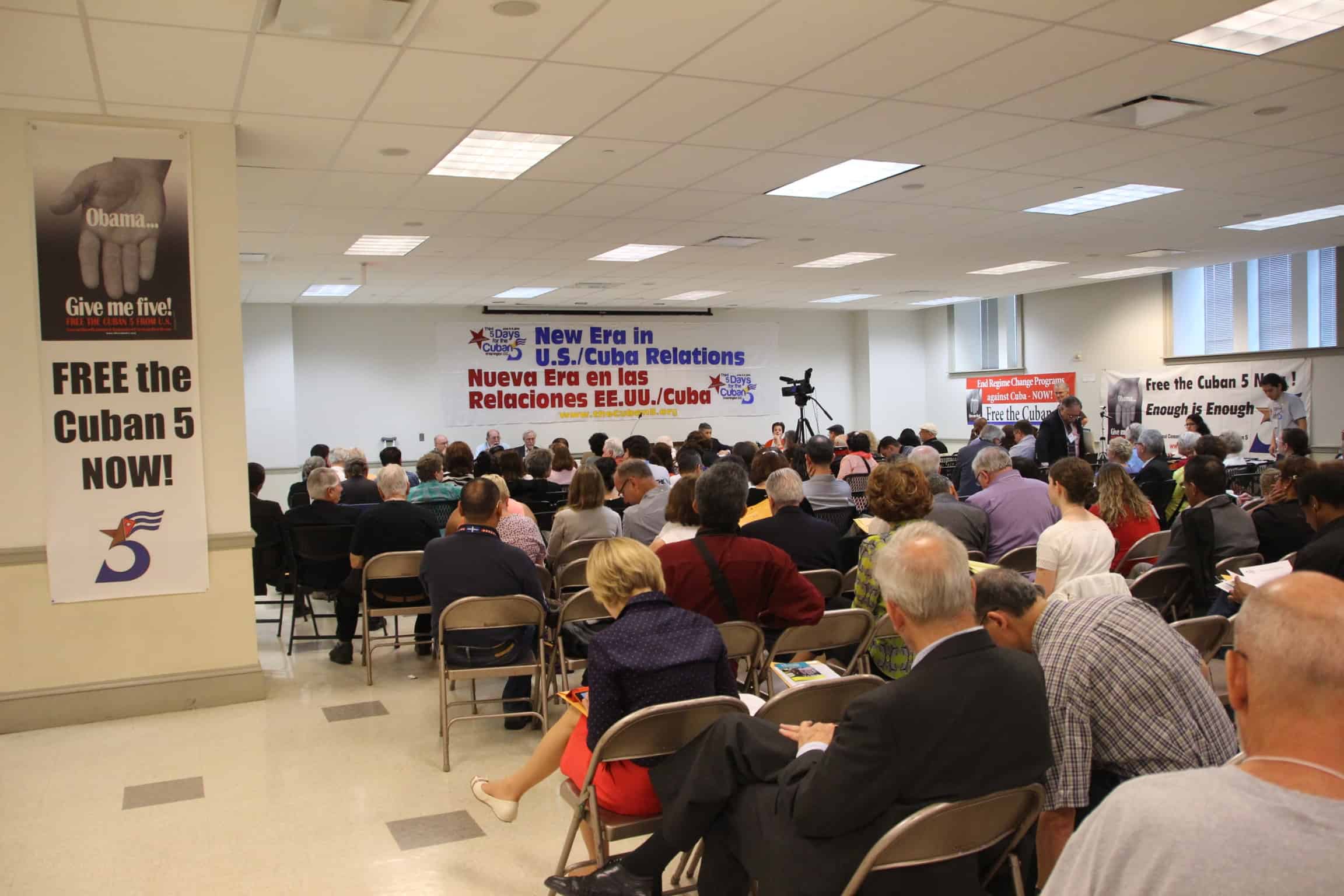
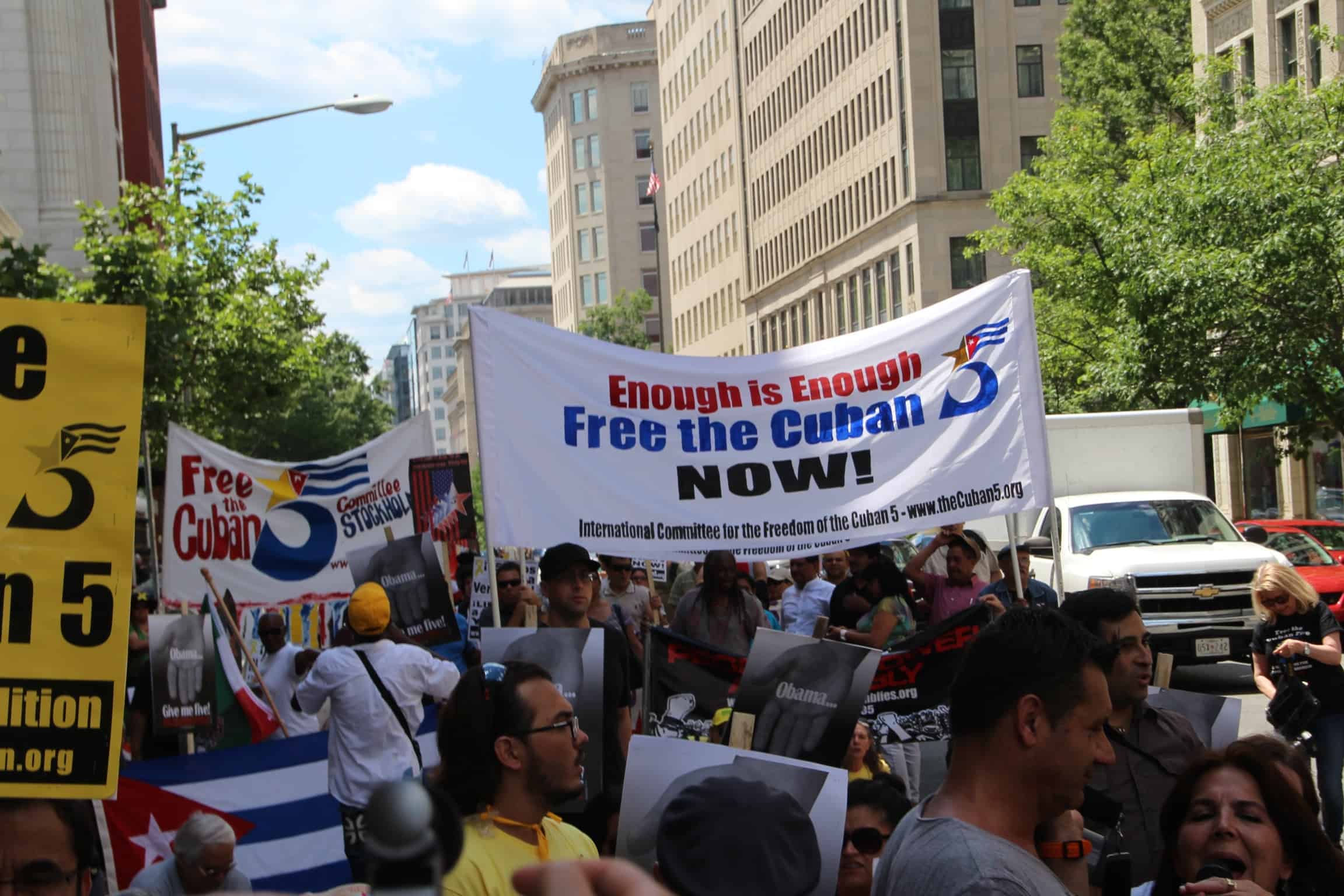
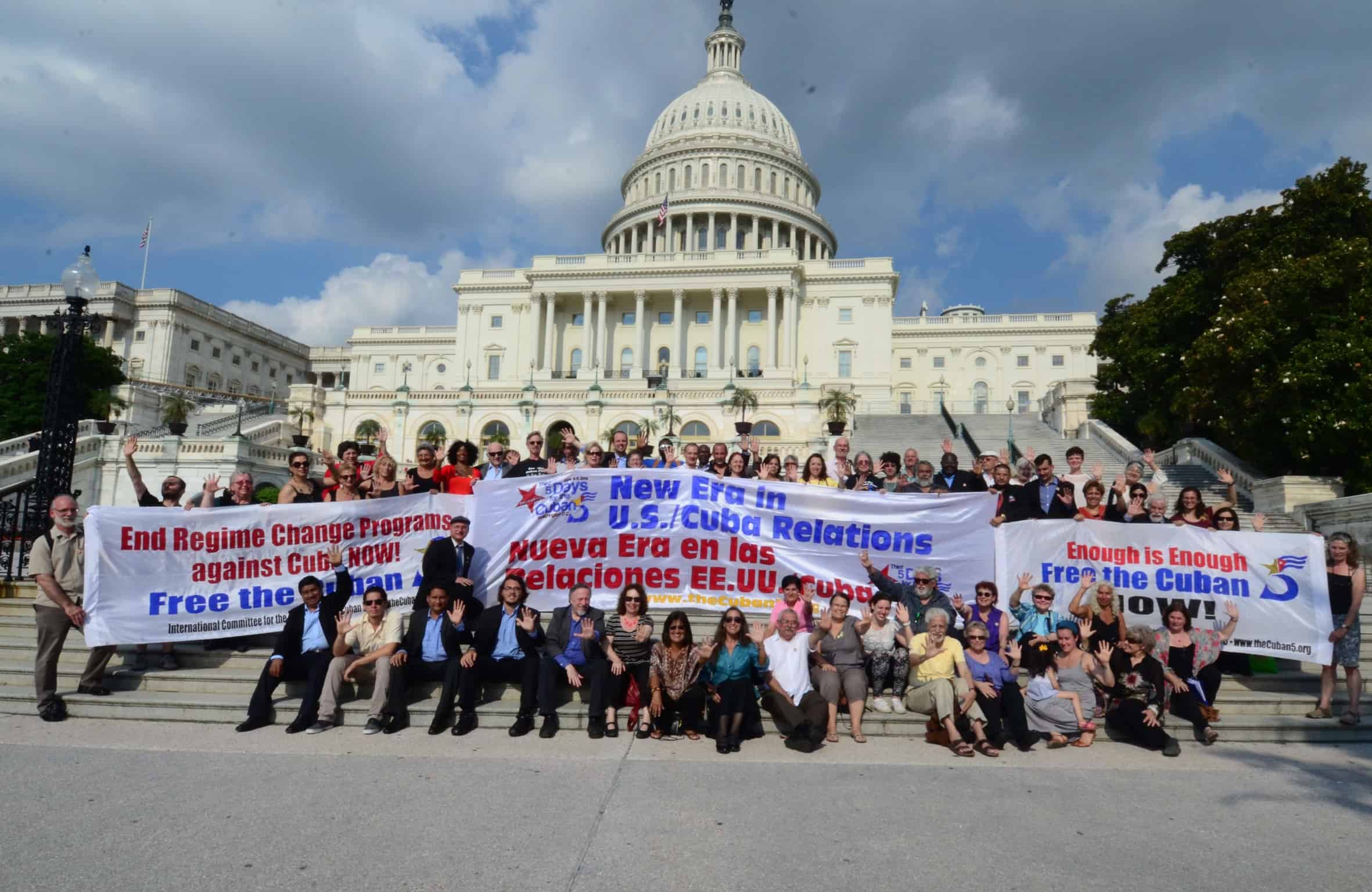
 There was the opening two-day conference focusing on the future of US-Cuba relations and featuring participants from around the world… a kick-off press conference at the National Press Club that generated interviews with the Washington Post, NPR and CCTV, not to forget lots of coverage in international media… a concert headlined by the well-known political hip hop group Dead Prez… a Saturday morning bicycle tour of Washington monuments by more than 25 delegates from Vancouver and elsewhere — their bikes festooned with “Obama, Give Me Five!” posters — who arrived at the White House en masse just as the main demonstration began… that 500-strong demonstration and march from the White House to the Justice Department… two intense days of lobbying more than 60 members of Congress by representatives of community, legislative and human rights groups from 31 countries… and even two meetings with senior State Department officials who’d never deigned to respond to requests for meetings in the past!
Not a bad week’s work.
This year’s third annual “5 Days for the Five” (June 4-11, 2014) in Washington, which was organized by the International Committee for the Freedom of the Five, was the most successful — and important — yet.
Over the past year, there has been a change in mood in Washington that the 5 Days events played into and off of.
 The timing — for a change! — was excellent. In the days leading up to the 5 Days in Washington, for example, the American Chamber of Commerce had been in Havana meeting with Cuban officials about trade possibilities and constructively criticizing the embargo. Their visit followed a recent letter from 44 senior officials — politicians, aides, diplomats, soldiers, including more than a few Bush era appointees — encouraging the president to improve relations with Cuba, including by “negotiating” for the release of Alan Gross. Which had followed last fall’s bipartisan letter And, just as the 5 Days’ two-day conference, “New Era in Us/Cuba Relations,” was about to begin, word leaked out that Hillary Clinton, in her new memoir, had claimed she urged President Obama to end the embargo while she was still Secretary of State. (That will be hard to run away from if/when she runs for president in 2016.)
Finally, on the eve of the 5 Days, came stunning news of the unexpected swap of American soldier Bowe Bergdahl for five members of the Taliban who’d been held at Guantanamo. Although the deal is controversial — and opinions are divided about its long-term impact on the prospects for a swap of Alan Gross for the three remaining members of the Five — the exchange certainly changed the conversation.
For the first time, many Alan Gross’s supporters openly — including in the pages of the Washington Post, New York Post and Jewish Forward — linked Gross’s fate to that of the remaining members of the Five and asked the key question: why not make a deal for Gross too?
I don’t want to paint too optimistic a picture. We’re far from there yet. And there are, of course, many and various ways in which any side could screw it up. As they are wont to do. And have done in the past. Plus, as was pointed out by a couple of the politicians we talked with, Obama and Kerry feel they need the support of Robert Menendez (Democratic Senator from New Jersey, Chair, Senate Foreign Relations Committee, virulent anti-Cuba politician) on so many other foreign policy issues, they don’t want to challenge him on Cuba. But I’m more optimistic now that this can end well than I have been at any time since that day back in 2009 when I decided to put away my novel and write instead about this truth-is-stranger-and-far-more-important nonfiction story of the Cuban Five.


 STEPHEN KIMBER, a Professor of Journalism at the University of King's College in Halifax and co-founder of its MFA in Creative Nonfiction Program, is an award-winning writer, editor and broadcaster. He is the author of two novels and eight non-fiction books. Buy his books

