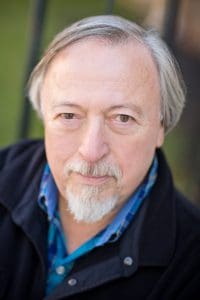
Stephen Kimber

Mulroney questions again… still: Jan. 28, 2007

Journalists ignore ‘troublesome episode’

It is one of the enduring mysteries of Canadian political journalism. Why are Ottawa journalists still so incredibly, inexplicably incurious about the fact an infamous international wheeler-dealer gave Brian Mulroney $300,000 in cash from a Zurich bank account within months after he stepped down as prime minister.

And why is nobody asking — demanding — to know why Stephen Harper’s Tories, within months of taking office last year, shut down a federal justice department inquiry into whether it should apply to have Mulroney’s $2-million settlement of his 1997 libel suit against the federal government set aside because Mulroney l— … er, was not entirely forthcoming about his relationship with the man who gave him those envelopes of cash at a series of meetings in hotels and restaurants?

We only learned about this latest Tory twist in the tawdry affair last week, thanks to an access to information request filed by the CBC, the only major news organization that seems to care about these questions.

The story of how this story has come not to be remains fascinating, and puzzling.

Quick summary. In the 1995, the federal government — investigating whether German-Canadian wheeler-dealer Karlheinz Schreiber had made illegal payments to grease Air Canada’s purchase of new jets — wrote to the Swiss government, seeking access to certain bank accounts. Mulroney took exception to the way in which the letter described him, and sued Ottawa for $50 million. Before that trial could begin — but after Mulroney testified under oath he barely knew Schreiber and had had no business dealings with him — Ottawa caved, agreeing to apologize and pay the former prime minister’s $2.1 million legal and PR bill.

The government, of course, didn’t know at the time Schreiber had secretly paid Mulroney $300,000.

When that information finally became public — buried deep in a 2003 Globe and Mail series attacking author Stevie Cameron for her role in promoting the RCMP investigation of Mulroney — the former prime minister’s flack claimed the money was for consulting work Mulroney had done for Schreiber in connection with plans for a pasta business. End of story.

But then Schreiber himself, in an interview with the fifth estate last February, effectively demolished that defence, claiming with a laugh that he had “learned to my great surprise that [Mulroney] worked with me on spaghetti.”

After that broadcast, lawyers in the federal justice department decided to re-examine the original file to see if there might be cause to ask the court to set aside the original deal with Mulroney because of his failure to be forthcoming in his testimony.

We still don’t know what the lawyers’ advice to the new Tory government actually was; we only know the department now “considers the file closed.”

That’s not all we know, of course. We know too that Mulroney, in the delicate phrasing of a Canadian Press report, has become “a valued advisor” to the new prime minister.

Which may explain why the federal government wishes this whole messy business would just go away. But it doesn’t explain why Canada’s journalists seem so disinterested in asking questions.

With the exception of a report and an editorial in the Globe and Mail, a quick search through Google News indicates not one news outlet did more than reprint the CP story on the new information.

Even the Globe’s own weasel-worded editorial is telling. Timorously entitled The Question Mulroney Hasn’t Really Answered, the editorial turned itself inside out to praise him as a man who had “earned the status of elder statesman,” and then suggested, oh-so-politely, that because he “is best positioned to clear the air over this troubling episode… he owes it both to the public and his legacy to do so.”

There was no hint in the editorial that its reporters would camp outside Mulroney’s home and office until he answers those “troubling” questions. And the Globe editorialists didn’t even bother to ask — politely, of course — why the Harper government decided to close the file so soon after it took office.

Stephen Kimber, the Rogers Communications Chair in Journalism at the University of King's College, is an award-winning author of five nonfiction books and a novel, Reparations.

I've been writing about media coverage of Brian Mulroney and the Airbus scandal for years.

Here are some of those earlier columns as well as a link to a magazine profile of Mulroney I wrote for the Financial Post magazine back in 1978 — between his first failed leadership bid and his second, successful one..

Click here for reuse options!

Copyright 2007 Stephen Kimber

Race and racism: Jan 21, 2007

Is it because he’s black?

The problem with racism is it isn’t as obvious as it once was. Segregated schools and whites-only clubs were easy targets. Trying to read between the lines of a blandly bureaucratic municipal planning report that claims putting a new landfill next door to a longstanding black community is a proper planning decision is… well, more complicated.

Likewise, it’s easy enough to name the racist act in Alabama sheriff Bull Connors’ orders back in the sixties to turn fire houses on black civil rights marchers, or even — to use a more recent, more local, perhaps more to the point example— for the Nova Scotia Human Rights Commission to conclude Halifax police officers were acting in a racist manner when they targeted local boxer Kirk Johnson for the un-crime of “driving while black” a few years ago.

But how do you decipher the decibel level of a debate in the House of Assembly? When does the “cut and thrust” of democracy cross some invisible VU-meter line and become an unacceptable racist act? When an MLA regularly greets everyone, including a black colleague, as “boss,” is that racist? When a heckler calls NDP MLA Leonard Preyra a “dark cloud” while he’s making a point in a debate, does the heckler simply mean Preyra is being too negative, or is it a not-so-subtle — and racist — reference to Preyra’s Indo-Canadian background? When the only black MLA sits down in the members’ lounge at the legislature and everyone else chooses to cram around another table rather than eat with him, is it because he’s black? Or because they don’t share his political views? Or don’t like him personally? Or …

NDP MLA Percy Paris touched off a firestorm last week when he spoke about his experiences since being elected the MLA for Waverley-Fall River-Beaver Bank last June.

Calling the legislature “the loneliest place I’ve ever worked,” Paris all but accused some of his colleagues of being racist.

The problem is he didn’t identify them. Nor did he offer much more in the way of specific acts beyond the ones I noted above, all of which are easy to interpret as almost anything along the spectrum from colour-blind commonplace to insensitive to racist, depending on the circumstances and the intent.

None of that is to suggest Paris is wrong.

He wouldn’t be the first “outsider” to have been frozen out of the middle-aged-white-boys club that was/is the legislature. During the early eighties, when Alexa McDonough was the only woman and only New Democrat in the House, she was routinely ignored, shunned, or worse by some male MLAs. Many of the responses she got when she complained — you just don’t understand the way the legislature works, you’re too sensitive and blah-blah-blah — are strikingly similar to what we’re hearing today.

And yet… There is something to those arguments too.

The House of Assembly is a raucous place. All MLAs get heckled from time to time. And, like the rest of us, there are people — white, black, male, female — MLAs would rather not socialize with for reasons having nothing to do with race.

Is that racism if the person on the receiving end is black? If that person feels offended?

Those of us who are white don’t usually have to confront the question: Is it because I’m black? We know there are people who don’t like us, and people we don’t like. We don’t have to ask if it’s because of race.

If you’re black, however, the question is always there.

Which is one reason we need to talk about what Percy Paris said.

But if we are going to, in Paris’s words, “take the lid off and see what’s inside,” we need to know more about the specifics of what he vaguely describes as “the avoidance of those individuals in the House of Assembly that do not want to have contact with me.” Who? When? What were the circumstances? What did Paris do about the perceived slight? How did — and do — those accused respond?

Paris’s reference to being offended by the use of the word “boss” as a greeting may be instructive. “That’s such a derogatory term for a person of African descent of my vintage,” he told reporters. “It means you're never going to be boss. You're always going to be subservient.”

Though Paris didn’t name names, House Speaker Cecil Clarke quickly acknowledged he calls many people boss, and had never understood anyone might consider it offensive. But he quickly — and rightly — added: “It’s important for all members to be aware if there’s something deemed offensive to another member that they be cognizant of that and be respectful of it too.”

The best way to deal with the kind of concerns Percy Paris raises is to talk about them. But with specific, concrete facts that will allow those accused to respond — and hopefully improve everyone’s understanding of where the racism lines are.

Stephen Kimber, the Rogers Communications Chair in Journalism at the University of King's College, is an award-winning author of five nonfiction books and a novel, Reparations.

Click here for reuse options!

Copyright 2007 Stephen Kimber

Fage…more Jan 14, 2007

Fiddling over Fage II fun, but…

The radio host’s question — coming as it did on a day when the premier of our province was reduced to absurdly repeating his new the-facts-are-the-facts mantra to explain away the latest inconvenient new facts that had suddenly replaced the old, no-longer-fact facts he’d been dispensing — seemed ludicrously apt.

“What,” asked Costas Halavrezos, the genial host of CBC Radio’s Maritime Noon phone-in show, “would encourage more people to vote?”

Well…

And yet…

Like so many scandals, this Fage II Fandango is not really about what it’s actually about — which is whether a provincial cabinet minister was drinking and driving and left the scene of an accident.

As important as that is, it is still, at heart, an incident of personal poor judgment that has already resulted in Fage’s resignation from cabinet and may yet lead to charges against him under the Motor Vehicle Act or, less likely, the criminal code. Which makes it, in the end, a matter between Ernie Fage and his conscience, the courts and his constituents.

While the government’s mishandling of the accident’s aftermath — and, of course, the bug-eyed, approaching-train-wreck fascination of watching a government self-destruct before our eyes — has ratcheted up the interest level, this scandal is not about an issue of public policy or how our government spends tax dollars.

That said, there were plenty of such issues floating out there last week, largely ignored, while we obsessed over Province House’s new who-knew-what-when-and-didn’t-tell-the-premier-because reality show.

As NDP leader Darrell Dexter allowed Thursday, he had doubts many Nova Scotians even knew what bill MLAs were debating this past week.

The government, you’ll recall, had thought its political party financing legislation so important it called the legislature back into special session just to deal with it. But that debate — which should have focused our attention on real questions like whether the new law was really just a political party cash grab in the guise of reform, or whether the Liberals should be allowed to keep tainted kickback cash from the seventies, or whether we should be allowing corporations and unions to contribute five times more to provincial political parties than they’re allowed to give federal parties — got drowned out in the tidal wave that was Fage II.

So did the latest report of the auditor general, which was released last week. It shows former premier John Hamm committed tax dollars to support the proposed 2014 Commonwealth Games without first allowing his own finance department to vet the games committee’s optimistic projections. That contravened the Provincial Finance Act. And the auditor general also expressed concern the government was making it difficult for his staff to get the information it needs to do its job. Those are important matters.

So too is last week’s report of the province's minimum wage review committee. It recommends the hourly wage 27,000 Nova Scotians depend on to survive be increased by 45 cents to $7.60 per hour. With the exception of the predictable bleating from the restaurant industry, there has been virtually no discussion of whether that’s too much, not enough, or just right.

The same goes for news Nova Scotia Power is scaling back its estimated fuel bill by $8 million, but isn’t going to cut its application for a power rate increase — in spite of the fact it had earlier used higher fuel costs to justify the need for high power rates in the first place.

Even the latest twist in the Heather Foley Melvin affair, an almost as titillating scandal that got shunted aside last week to make space for the Fage Follies, is ultimately more significant in terms of the government’s credibility and performance. The Liberals, who are propping up the Conservatives until they get their own leadership house in order, sidetracked an NDP motion to force Foley Melvin — who, you’ll recall, the premier appointed to an important provincial job she wasn’t qualified for in order to get her out of a job in his office she’d done poorly — to return to the public accounts committee to answer legitimate questions she’d refused to answer in an earlier appearance.

And so it goes.

Which brings us back to Costas’ question: What would encourage more people to vote? Would it make any difference if we in the media — and, to be fair, we in the public — paid more attention to what matters and less to turning sideshows like Fage into wrestling’s main event. Maybe, maybe not. But it’s an interesting question.

And now, back to Fage II.

Stephen Kimber, the Rogers Communications Chair in Journalism at the University of King's College, is an award-winning author of five nonfiction books and a novel, Reparations.

Click here for reuse options!

Copyright 2007 Stephen Kimber

Jan. 7, 2007: Another Tory mess

Fage I, Foley Melvin and now… Fage II

The bigger mess, as is so often the case in Rodney MacDonald’s all-message-track-all-the-time government, has less to do with the initial stupidity and more — much more — to do with the premier’s inept mishandling of everything that happens afterward.

That’s not to suggest the specifics of the allegedly itself aren’t serious. They are.

The allegation — the usual caveats of the trade, that no charges have been laid and nothing has been proven in court, apply here — involves a hit-and-run collision early in the morning of Nov. 24, 2006.

Earlier that evening, the legislature had shuttered its doors after a short fall session, so some MLAs decided to celebrate at a downtown bar. According to one witness, who spoke to Daily News reporter Brian Flinn on condition of anonymity, Tory cabinet minister Ernie Fage was among them. He was drinking red wine.

At about 12:15 a.m., a black government Jetta rear-ended a red Nissan Sentra at a traffic light on Sackville Street.

The driver and passenger in the Nissan got out to see if the Jetta’s driver was OK. They say they could smell alcohol and the man in the driver’s seat — they didn’t recognize him — was slurring his words.

After a passerby named David Gamble stopped to see if everyone was OK, the driver of the black Jetta backed up and drove off through a red light and on the wrong side of the street. Gamble, a professional photographer, followed and used his cell phone’s camera to videotape the car and the man — he also didn’t know who he was — in the parking lot of his apartment. When he asked why he’d left the scene of the accident, the man said nothing. Gamble also smelled alcohol on his breath and described him as “acting sort of erratically.”

The driver of the Nissan, who says the rear-ender resulted in $3,500 in damages, immediately reported the accident— and the Jetta’s license number — to police.

But news of Fage’s involvement only surfaced publicly Thursday after police investigators saw Gamble’s video Wednesday and told him the man he’d photographed was Human Resources Minister Ernie Fage.

That’s not to say that nothing else happened between Nov. 24 and this week.

According to police, the Jetta driver — they won’t confirm it was Fage — did come forward, a week after the accident, to say he was involved.

The premier, who only finally accepted Fage’s resignation after CBC-TV reported the incident — says Fage told him “shortly before Christmas” he’d been involved a minor accident and reported it to police. MacDonald insists he only learned of the week’s delay in reporting it from the TV News report.

But that was all he would say. As usual, MacDonald had one message and he was going to keep repeating it until reporters gave up asking.

“At 7:30, I accepted Ernie Fage's resignation from cabinet. Mr. Fage … said he did not want the incident to be a distraction from the job, or the work of the government… It would be inappropriate for me to make any [other] comment on the incident.”

It’s not that easy. This is the second time Fage, one of MacDonald’s key leadership supporters, has had to resign amid allegations of impropriety. After Fage I, MacDonald brought him back into the cabinet.

Which raises questions about the premier’s judgment.

As does his similarly inept handling of Scandal II: appointing unqualified Heather Foley Melvin — another key leadership backer — to head a key energy conservation agency.

Given the premier’s track record (he hasn’t even been premier a year), we have a right to know more about his pre-Christmas conversation with Fage? Did the premier ask Fage if alcohol was involved? Did he ask — given that this was a supposedly minor fender bender — what was so unusual about it that prompted Fage to tell the premier?

“I've shared with you all of the information I've had,” MacDonald insisted.

Not good enough.

If Fage had acted appropriately — immediately reporting his involvement to police and offering the premier his resignation over his lapse of judgment — this might have been another few-day embarrassment for a government that has had its share. But Fage — who has made a habit of not being forthcoming about his missteps — didn’t do the right thing.

And MacDonald — apparently — didn’t ask the right questions.

With the legislature set to return this week, perhaps the opposition will ask them. Just don’t bet on the premier answering them.

Stephen Kimber, the Rogers Communications Chair in Journalism at the University of King's College, is an award-winning author of five nonfiction books and a novel, Reparations.

Click here for reuse options!

Copyright 2007 Stephen Kimber

  • Search

  • Subscribe

    RSS
  • Recent Posts

  • Archives

  • About

    Stephen Kimber

    STEPHEN KIMBER, a Professor of Journalism at the University of King's College in Halifax, is an award-winning writer, editor and broadcaster. He is the author of one novel -- Reparations -- and seven non-fiction books.

    Buy his books at Amazon.