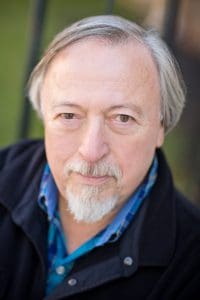
Stephen Kimber

Rocky Jones: The past and future of the Nova Scotia human rights’ struggle

I wanted to ask Rocky Jones about his Wednesday lecture: “The Struggle for Human Rights in African Nova Scotian Communities, 1961-2011.”

No problem.

When?

METRO LOGO GREEN

Not today. He’s on a panel at a national conference on public policy. Saturday, he’s in Truro, keynote speaker at an International Year for People of African Descent symposium. Then Ottawa for the Canadian Broadcast Standards Council; he’s on the private broadcast industry’s regional self-regulatory panel. And, finally, back to Halifax for the inaugural talk in Dalhousie University’s James Robinson Johnston Distinguished Lecture Series.

I thought you’d retired.

He laughs.

No one is better positioned to speak about the struggle for human rights in Nova Scotia over the past 50 years—and the next 50—than Burnley “Rocky” Jones. He’s central to that struggle.

During the mid-sixties, Jones and his then wife set up Kwacha House, a drop-in centre for inner-city black youth. It so frightened city fathers they lobbied to shut it down.

In 1968, he invited the Black Panthers to Halifax. In response, Ottawa quickly funded the “moderate” Black United Front just to undercut his growing popularity among “disaffected negroes.”

Someone set his house on fire—twice—and the RCMP began not-so-secretly following him.

In 1970, he helped lead a March on city hall by thousands of activists after city council secretly—some things never change!—hired a racist city manager. This time, the good guys won.

In 1970, he helped launch Dalhousie’s unique Transition Year Program to assist local blacks and natives succeed in university. Later, he developed innovative employment programs for ex-inmates, ran unsuccessfully for political office and launched a massive oral history project to record the stories of black elders.

After graduating from Dalhousie’s then-new Indigenous Black and Mi'kmaq law program in 1992, he went on to become one of Nova Scotia’s preeminent civil rights lawyers, arguing cases all the way to the Supreme Court.

Recently, he was in the news again—at 70—lobbying successfully against the appointment of a white outsider to head up the Africville Heritage Society.

Unsurprisingly, he has opinions on the current state—and future direction—of our province's human rights movement.

“But you’ll have to come to the speech for those,” he says.

I’ll be there.

Related posts:

Information on the Lecture:
The James Robinson Johnston Chair in Black Canadian Studies at Dalhousie University launches its Distinguished Lecture Series by featuring
BURNLEY ROCKY JONES,
Lawyer and Human Rights Advocate, speaking on
THE STRUGGLE FOR HUMAN AND CIVIL RIGHTS IN THE AFRICAN NOVA SCOTIAN COMMUNITY, 1961-2011

Date: Wed. 23 Nov. 2011
Time: Reception: 6-7; Lecture: 7:15
Venue: Kenneth C. Rowe Management Building, Potter Family Auditorium, Dalhousie University, 6100 University Ave (at Henry St.) Halifax, Nova Scotia, Canada.
Admission: Free

Click here for reuse options!

Copyright 2011 Stephen Kimber

Heroes and blemishes: Edward Cornwallis and Cesar Chavez

“Edward Cornwallis is deeply offensive to members of our Mi’kmaq communities and to Nova Scotians generally who believe school names should recognize persons whose contributions to society are unblemished by acts repugnant to the values we wish our schools to embody and represent.”

Kirk Arsenault
Aboriginal Halifax School Board member

***


The Atlantic’s
latest issue boasts a history-revisiting article about Cesar Chavez, a hero of my youth. I read it last week as our school board expunged the name of Halifax’s European founder, Edward Cornwallis, from a local Junior High.

During the sixties, Chavez—an iconic, Ghandi-following, Mexican-American union leader—organized 50,000 grape pickers and lettuce harvesters to challenge California’s all-powerful farm owners.

“Si, se puede”—Yes it’s possible—became his rallying cry. Inspired by Chavez, white liberals—me too—boycotted grapes for five long years until the farm workers finally won a contract. I can still recall the sweetly satisfying taste of my first post-boycott grape.

Chavez, who died in 1993, is rightly revered. His birthday is a holiday in California and seven other states. Colleges, schools, parks, streets, even a bowling alley are named in his honour.

METRO LOGO GREEN

The Atlantic piece focuses on an “exhaustively researched, by turns sympathetic and deeply shocking” new book re-examining Chavez’s life and legacy. It claims his saintly image masked “the take-no-prisoners, balls-out tactics of a Chicago organizer.” Chavez, for example, turned over to immigration authorities undocumented workers who didn’t support his union so they would be deported. Later, he fell under the spell of a “sinister cult leader,” became “unhinged” and even mocked his own farm-worker followers. “Every time we look at them, they want more money,” he complained in one recorded conversation. “Like pigs, you know.”

So… should California cancel its holiday, rename its schools and parks?

Cesar Chavez—like Edward Cornwallis—isn’t “unblemished.”

That appears to have become the Halifax school board’s new litmus test for having a school named after you.

But no hero—no human hero—can pass that test. Not Chavez. Not Cornwallis. But also not Martin Luther King, John A. MacDonald, Nelly McClung, even “Canada’s Greatest Hero,” Tommy Douglas...

Edward Cornwallis helped establish Halifax, a noteworthy accomplishment to those of us who now call it home. But during the English-French-Mi’kmaq struggle to control the territory, Cornwallis offered a bounty for any captured or killed Mi’kmaq, “or his scalp as is the custom of America.”

The notion rightly shocks our contemporary sensibilities, but Cornwallis wasn’t alone. Nor were the English. It was a nasty time.

We should be able to honour Cornwallis for his accomplishments while acknowledging not everything he did was honour-worthy.

Which is true of most of us.

Click here for reuse options!

Copyright 2011 Stephen Kimber

Entitled to their entitlements, aboriginal edition

The Canadian Taxpayers’ Federation is right. There, I’ve said it. And it only hurt a little.

While I can—and do, and will—dispute the larger goals of this never-met-a-public-expenditure-it-can-stomach crowd, the CTF did discover real slime under its latest freedom-of-information rock.

METRO LOGO GREEN

Though there are only a million aboriginals in Canada, 82 reserve politicians “earned” more than the prime minister’s $315,462 salary last yea

r, 222 pocketed more than their provincial-premier counterparts and 70

4 raked in the tax-free equivalent of $100,000-plus.

One Nova Scotia councilor—on a reserve with 304 members—took home $978,468 tax free.

Some First Nations leaders argue these CTF remuneration numbers are ripped from their context—that the packages lump together salaries, honoraria, travel expenses and contracts for native businesses, and that native political leaders don’t get plush pensions like their non-native colleagues.

Some complain darkly that singling out native leaders smacks of racism.

Mi’kmaq elder Daniel Paul blames the Department of Indian Affairs, which he says has been “well aware of what’s going on and have chosen not to do a thing about it.”

There is plenty of blame to go around.

Traditional government paternalism coupled with a more recent laissez-faire fear of appearing to question First Nations’ autonomy created fertile ground for nefarious native leaders who choose to take advantage.

Whenever politicians operate in secret and are unaccountable to the people who elect them, entitled-to-their-entitlements corruption is sure to follow. (See Nova Scotia MLA expense scandal, federal sponsorship scandal, David Dingwall, et al, ad nauseum.)

What makes this scandal more difficult to digest is the stark reality of non-leader aboriginal life in Canada.


Consider the third-world conditions that exist on many Canadian reserves. Consider that aboriginal young people are seven times more likely to commit suicide than the national average. Consider that the unemployment rate for aboriginals in Nova Scotia last year was 17.4 per cent compared with nine percent for non-aboriginals, and that employed aboriginals earned just 77 per cent of hourly waged non-aboriginals.

Now consider again those CTF numbers.

It is past time for transparency and accountability. It’s time to put power in the hands of native communities, not native leaders.

Click here for reuse options!

Copyright 2010 Stephen Kimber

TYP: It all began in a duck blind

What became the “most important (educational) program ever” for Nova Scotia’s black and aboriginal communities began inauspiciously enough in a duck blind in the middle of the Nova Scotia nowhere.

METRO LOGO GREEN

Dalhousie University’s Transition Year Program—a unique-for-its-time scheme to bring marginalized black and native students into the academic mainstream through a year-long process to “transition” them into university—celebrated its 40th anniversary this past weekend with a reception, symposium, dinner and dance.

Its conception was decidedly more humble.

In October 1968, Rocky Jones, then a black radical student activist, invited his friend Jim Walker, then a freshly minted white Dalhousie grad student, for a duck hunting weekend. “Rocky is an avid hunter,” Walker jokes today. “I am not.”

They built a lean-to but it was so cold they zipped their sleeping bags together and even invited Rocky’s Labrador retriever into the bag to stay warm.

“I should mention,” Walker adds, “we had a bottle of rum we passed back and forth.”

They talked through the night—about Mississippi freedom schools, the fledgling American “head start” school programs, a recent report documenting the shockingly low numbers of black Nova Scotians in university…

At some point, remembers Jones, they concocted a scheme that—after two years of discussion and the perhaps surprising support of then-Dalhousie president Henry Hicks—became the Transition Year Program.

Today, Jones is one of Canada’s most prominent civil rights lawyers, Walker is a history professor and author of the seminal book on Nova Scotia’s black loyalists, and TYP is a model for programs across North America.

Its most important accomplishment, Jones suggests, is that it helped foster a cadre of educated local black and aboriginal grads who returned to their own Nova Scotia communities and became leaders there.

Is the program still needed?

Yes, says Jones. But it needs to return to its roots. In recent years, it has admitted more students from outside Nova Scotia. Many don’t stay after they graduate. “We’re losing leadership,” Jones says. Which is especially troubling, he adds, at a time when many local black and native communities desperately need a new generation of educated leaders.

So a toast to TYP. To what it was. And still needs to be.

***

If you'd like to read more of Jim Walker's recollections of the beginnings of the Transition Year Program, you can find his emailed response to my queries here.


Click here for reuse options!

Copyright 2010 Stephen Kimber

Protecting privacy or covering up?

So whose privacy are they protecting?

On Dec. 2, 2008, an RCMP constable shot and killed John Andrew Simon, a member of Cape Breton’s Wagmatcook First Nation. Simon, everyone agrees, was alone inside his house, drunk and suicidal, at the time he was killed. According to what police reportedly told Simon’s family, he was unarmed, sitting on the toilet and smoking a cigarette when Cst. Jeremy Frenette first entered the house. They claim Simon then fled to the kitchen where he grabbed his shotgun. Frenette fired three times, killing Simon.

What was Cst. Frenette doing inside the house without a warrant? And without backup? Especially considering that Simon, at that point, was no threat to anyone except himself.

METRO LOGO GREEN

The Halifax Regional Police, who led what was supposed to be an arms-length investigation into the shooting, concluded he only fired “after reasonably perceiving that John Simon posed a threat of grievous bodily harm or death and believing that he could not otherwise preserve himself from grievous bodily harm other than by using deadly force.”

Simon’s widow and members of the local band council would beg to disagree.

But that’s not the issue here.

Why are the Mounties now refusing to release the report into the incident? Just as importantly, why is it even the RCMP’s call whether to release this supposedly independent review?

RCMP Chief Supt. Blair McKnight told reporters in December the Mounties weren’t “permitted” to release the report under Canada’s privacy laws.

Whose privacy is being protected here? Simon himself is dead. His widow and the local band council—which contract the RCMP to police their reserve—both say they want to read a copy of the report.

Others have seen it. Nova Scotia’s Justice Minister, Ross Landry, for example—himself a former RCMP officer—told reporters this week he has read the report and believes the band council should too before he makes his decision on their request for a public inquiry into Simon’s death. His office, in fact, is trying to help the band get a copy.

But RCMP brass seem happy to hide the report behind the privacy veil.

Little wonder the Wagmatcook band council has decided to replace the RCMP when its policing contract expires at the end of next month. Little wonder too that the council has called for a public inquiry to determine why “policing hasn’t changed in our First Nation territories” in the two decades since the Marshall Inquiry report.

Click here for reuse options!

Copyright 2010 Stephen Kimber